
A Frustrating Problem That's More Common Than You Think
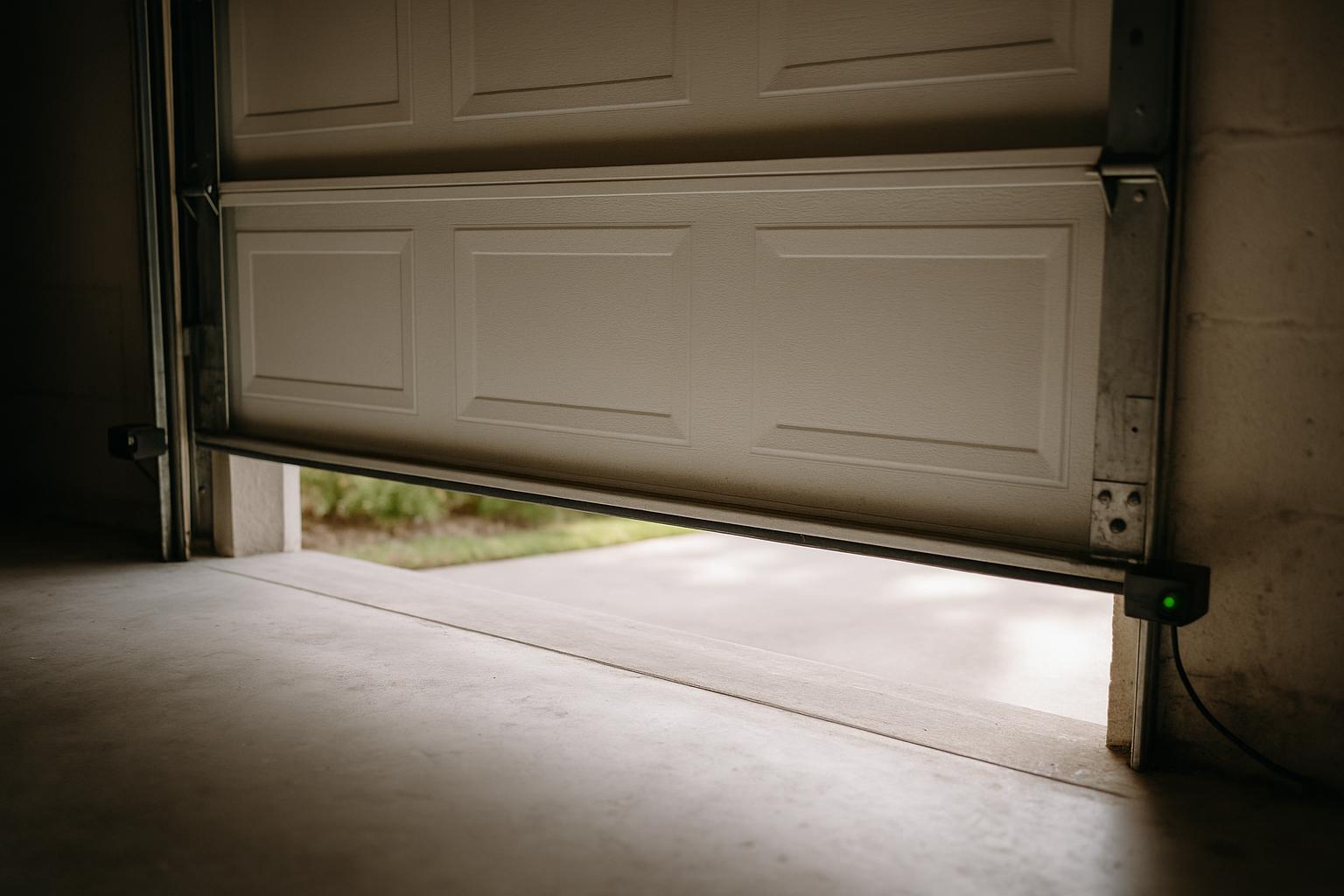
You press the button on your garage door remote, the door starts its descent, and then — just inches from the ground — it reverses direction and goes right back up. You try again. Same thing. Maybe it works on the third attempt, or maybe it doesn't work at all.
This is one of the most common garage door complaints we hear from homeowners in Palm Beach Gardens, and it's understandably frustrating. The good news is that the cause is usually identifiable, and in many cases, the fix is straightforward. The not-so-good news is that ignoring the problem can lead to bigger issues down the road, including a door that stops working entirely or becomes a safety hazard.
Let's walk through the most likely reasons your garage door reverses before closing and what you can do about each one.
The Safety Sensors Are Misaligned or Blocked
This is the number one cause of a garage door that reverses before reaching the floor. Every garage door opener manufactured after 1993 is required by federal law to have photo-eye safety sensors. These small sensors sit on either side of the door near the ground and project an invisible beam between them. If anything breaks that beam — a bike, a trash can, a leaf, or even a cobweb — the opener interprets it as an obstruction and reverses the door.
Here's what to check:
- Look for obstructions. Make sure nothing is sitting in the path of the sensors. Even a small object can trigger the reversal.
- Clean the sensor lenses. Dust, dirt, and spider webs are extremely common in Palm Beach Gardens garages, especially during the humid summer months. A quick wipe with a soft cloth can solve the problem.
- Check the alignment. Each sensor has a small LED light. If one is blinking rather than glowing steadily, the sensors are likely out of alignment. Gently adjust the misaligned sensor until both lights are solid.
If you've tried all of this and the door still reverses, the sensor wiring may be damaged or the sensors themselves may need replacement.
The Close-Limit Switch Needs Adjustment
Your garage door opener has limit switches that tell it how far the door should travel in both the open and closed positions. If the close-limit switch is set incorrectly, the opener may think the door has hit something when it's actually just reaching the floor. The opener's built-in safety feature then kicks in and reverses the door.
Adjusting the limit switch usually involves turning a small screw on the opener unit. The process varies by manufacturer, so check your owner's manual for specific instructions. If you're not comfortable making this adjustment yourself, it's a quick fix for a professional technician.
The Tracks Are Dirty, Damaged, or Misaligned
Your garage door travels along metal tracks on both sides. Over time, these tracks can accumulate debris, develop dents, or shift out of alignment. When the rollers encounter resistance in a damaged or dirty track, the opener senses the extra force and reverses the door as a safety precaution.
Inspect your tracks visually:
- Look for visible dents, bends, or gaps where the track sections meet.
- Check for buildup of dirt, grease, or small debris inside the track channel.
- Make sure the tracks are firmly secured to the wall with their mounting brackets.
You can clean the tracks with a damp cloth, but if you notice bending or misalignment, call a garage door professional. Attempting to bend tracks back into shape without the right tools can make the problem worse.
Worn or Broken Springs Are Creating Imbalance
Garage door springs bear the weight of the door and make it possible for the opener to lift and lower it smoothly. When springs wear out — which happens gradually over thousands of cycles — the door becomes heavier for the opener to manage. This added resistance can trigger the auto-reverse function.
You can test your door's balance by disconnecting the opener (pull the red emergency release handle) and manually lifting the door halfway. A properly balanced door should stay in place. If it falls or feels extremely heavy, the springs likely need attention.
Important safety note: Garage door springs are under extreme tension and can cause serious injury if handled improperly. Spring replacement is not a DIY job. If you suspect your springs are the issue, contact a qualified technician.
The Opener's Force Settings Are Off
Garage door openers have adjustable force settings that control how much power the motor uses to open and close the door. If the closing force is set too low, the opener may not have enough power to push the door all the way down, interpret the normal resistance of the floor as an obstruction, and reverse.
Like the limit switch, the force setting is typically adjusted with a screw or dial on the opener unit. Increase the closing force slightly and test the door. Be careful not to set it too high — the door should still reverse when it encounters a real obstruction. This is a critical safety feature, especially in homes with children or pets.
Weather and Humidity Can Play a Role
Living in South Florida means dealing with heat and humidity year-round, and these conditions can affect your garage door system. Wooden doors can swell and create additional friction. Metal components can expand slightly. Lubricant can dry out faster than expected, causing rollers and hinges to bind.
Regular maintenance — including lubrication of moving parts and inspection of weatherstripping — goes a long way toward preventing these seasonal issues. We recommend Palm Beach Gardens homeowners schedule a professional maintenance visit at least once a year to keep everything running smoothly.
When to Call a Professional
Some of the fixes above are simple enough for a handy homeowner to tackle. But if you've gone through the checklist and your door is still reversing, or if you've identified a problem involving springs, tracks, or wiring, it's time to bring in a professional.
At Palm Beach Gardens Garage Door Specialists, we diagnose and repair these issues every day for homeowners throughout Palm Beach Gardens, Jupiter, North Palm Beach, and the surrounding area. Our technicians arrive on time, explain what's going on in plain language, and get your door working properly — usually in a single visit.
Don't Ignore a Reversing Garage Door
It might seem like a minor annoyance, but a garage door that won't close properly is a security risk, an energy efficiency problem, and potentially a safety hazard. The longer you wait, the more likely a small issue turns into a costly repair.
If your garage door is giving you trouble, give us a call. We'll figure out what's going on and get it fixed right the first time.