
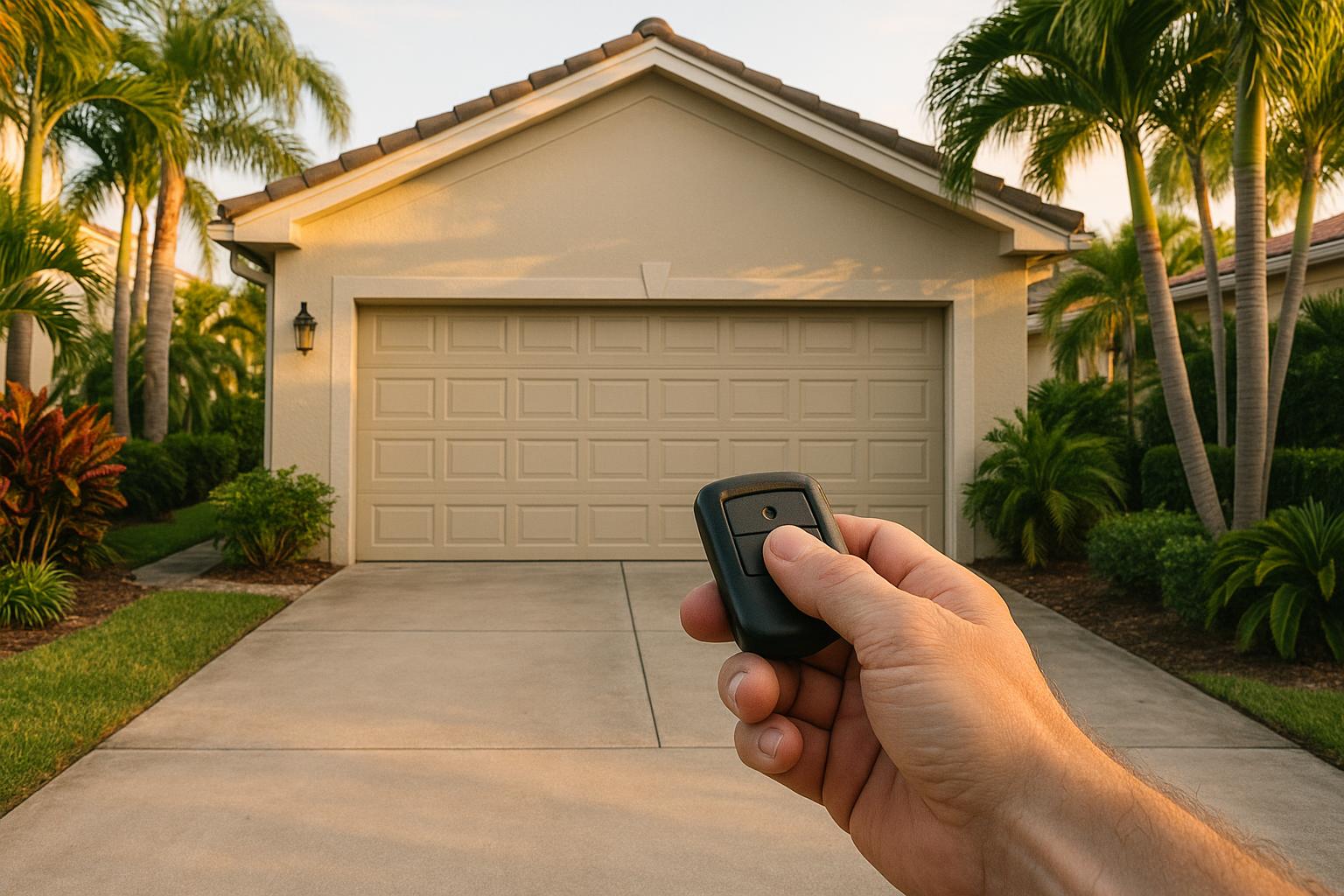
You're Running Late and Your Garage Door Won't Budge
It's 7:30 a.m. in Palm Beach Gardens, you've got your coffee in hand, and you're ready to head out. You press the garage door opener button — and nothing happens. Or maybe the motor hums but the door stays put. Few things are more frustrating than a garage door that won't cooperate when you need it most.
Before you panic or call in sick, take a breath. Many of the reasons a garage door refuses to open are surprisingly common, and some can even be resolved without a service call. Let's walk through the most likely culprits and what you can do about each one.
1. Dead Batteries in Your Remote
It sounds almost too simple, but this is the number one reason people think their garage door is broken. Remote batteries typically last one to two years, and they tend to die without warning.
What to do: Try the wall-mounted button inside your garage. If the door opens from the wall switch but not the remote, swap out the remote batteries. Most garage door remotes use standard CR2032 coin batteries that you can pick up at any store.
2. The Photo-Eye Sensors Are Misaligned or Dirty
Every modern garage door has two small sensors near the bottom of the door tracks, one on each side. These photo-eye sensors send an invisible beam across the opening, and if that beam is interrupted or blocked, the door won't close — and in some cases, it won't open properly either.
What to do: Check whether the small LED lights on both sensors are lit and steady. If one is blinking or off, the sensors may be misaligned. Gently wipe the lenses with a soft cloth to remove dust, cobwebs, or moisture. In Palm Beach Gardens, morning dew and humidity can cause condensation on the sensor lenses overnight, which is a surprisingly common issue during the warmer months.
3. The Door Is Locked — Manually
Many garage doors have a manual lock mechanism, usually a handle or latch on the inside of the door. If someone accidentally engaged it, or if it slipped into the locked position, the opener motor will strain against a door that physically cannot move.
What to do: Check the interior of your garage door for a manual lock or slide bolt. Disengage it and try opening the door again. If you hear the motor straining but the door doesn't budge, this is one of the first things to inspect.
4. A Broken Torsion Spring
Torsion springs are the heavy-duty coils mounted above your garage door that do the real heavy lifting. When a spring breaks, the opener motor simply doesn't have enough power to raise the door on its own. You might hear the motor running, see the door lift an inch or two, and then stop.
What to do: Look at the springs above your door. A broken spring will have a visible gap in the coil. Do not attempt to replace garage door springs yourself. These components are under extreme tension and can cause serious injury. This is a job for a trained technician, and it's one of the most common service calls we handle in Palm Beach Gardens and the surrounding areas like Jupiter, North Palm Beach, and Juno Beach.
5. The Opener Has Been Disconnected
Garage door openers have an emergency release cord — usually a red handle hanging from the track mechanism. If this cord has been pulled, the door is disconnected from the opener and will only operate manually.
What to do: Pull the door closed manually, then re-engage the opener by pulling the release cord toward the motor unit until you hear it click back into place. Then try the remote or wall button again. This often happens after a power outage when someone manually opens the door and forgets to reconnect it.
6. Power Issues
After a storm or overnight power fluctuation — both common in South Florida — your garage door opener may have lost power. The motor unit plugs into a standard outlet on your garage ceiling, and that outlet may be on a circuit that tripped.
What to do: Check your electrical panel for a tripped breaker. Also verify that the opener unit is still plugged in. If you've recently had electrical work done or experienced a power surge, the outlet itself may need attention.
7. Worn or Broken Cables
Garage door cables work alongside the springs to raise and lower the door evenly. If a cable snaps or slips off its drum, the door may open crookedly, get stuck partway, or refuse to move at all.
What to do: Visually inspect the cables on both sides of the door. If you see a cable hanging loose, frayed, or off the drum, stop using the door immediately. Operating a garage door with a broken cable can cause further damage to the door and tracks, and it poses a safety risk. Call a professional to handle the repair.
8. Track Obstructions or Damage
Over time, the metal tracks that guide your garage door can accumulate debris, develop dents, or shift out of alignment. Even a small obstruction — a pebble, a piece of debris from yard work, or a child's toy — can prevent the door from traveling smoothly.
What to do: Inspect the tracks on both sides of the door from top to bottom. Remove any visible debris and look for dents or bends in the metal. Minor debris removal is a safe DIY fix, but bent or misaligned tracks should be handled by a professional to avoid making the problem worse.
When to Call a Professional
If you've checked the basics — batteries, sensors, locks, power, and the emergency release — and your door still won't open, it's time to bring in a technician. Issues involving springs, cables, tracks, and the opener motor itself require specialized tools and experience to repair safely.
At Palm Beach Gardens Garage Door Specialists, we understand that a stuck garage door isn't just an inconvenience — it can disrupt your entire schedule and even compromise your home's security. That's why we offer prompt service throughout Palm Beach Gardens, West Palm Beach, Tequesta, and all surrounding communities. We show up on time, diagnose the problem quickly, and get your door working again so you can get on with your day.
Prevent Morning Surprises with Regular Maintenance
The best way to avoid a garage door that won't open when you need it most is to stay ahead of problems with routine maintenance. A professional tune-up once or twice a year can catch worn springs, fraying cables, misaligned sensors, and other issues before they leave you stranded in your garage.
- Lubricate moving parts including rollers, hinges, and springs
- Test the balance of the door by disconnecting the opener and lifting manually
- Inspect cables, springs, and hardware for signs of wear
- Clean and align photo-eye sensors
- Tighten loose bolts and brackets
A few minutes of preventive care can save you from the stress and expense of an emergency repair. If it's been a while since your garage door had a checkup, give us a call — we're happy to help keep everything running smoothly.