
Your Garage Door Springs Are Working Harder Than You Think
Every time you open and close your garage door, the springs do the heavy lifting — literally. A standard residential garage door can weigh anywhere from 130 to 350 pounds, and the springs are responsible for counterbalancing all of that weight. Without functioning springs, your garage door opener alone can't move the door, and attempting to lift it manually becomes dangerous.
Most homeowners in Palm Beach Gardens use their garage doors multiple times a day. Between heading to work, school drop-offs, running errands, and coming home, it's not unusual for a garage door to cycle four to six times daily. Over the course of a year, that adds up to well over a thousand cycles. And every cycle brings your springs one step closer to the end of their lifespan.
Understanding the warning signs of failing springs can help you avoid the inconvenience — and potential danger — of a sudden spring failure.
The Two Types of Garage Door Springs
Before diving into the warning signs, it helps to know which type of springs your garage door uses:
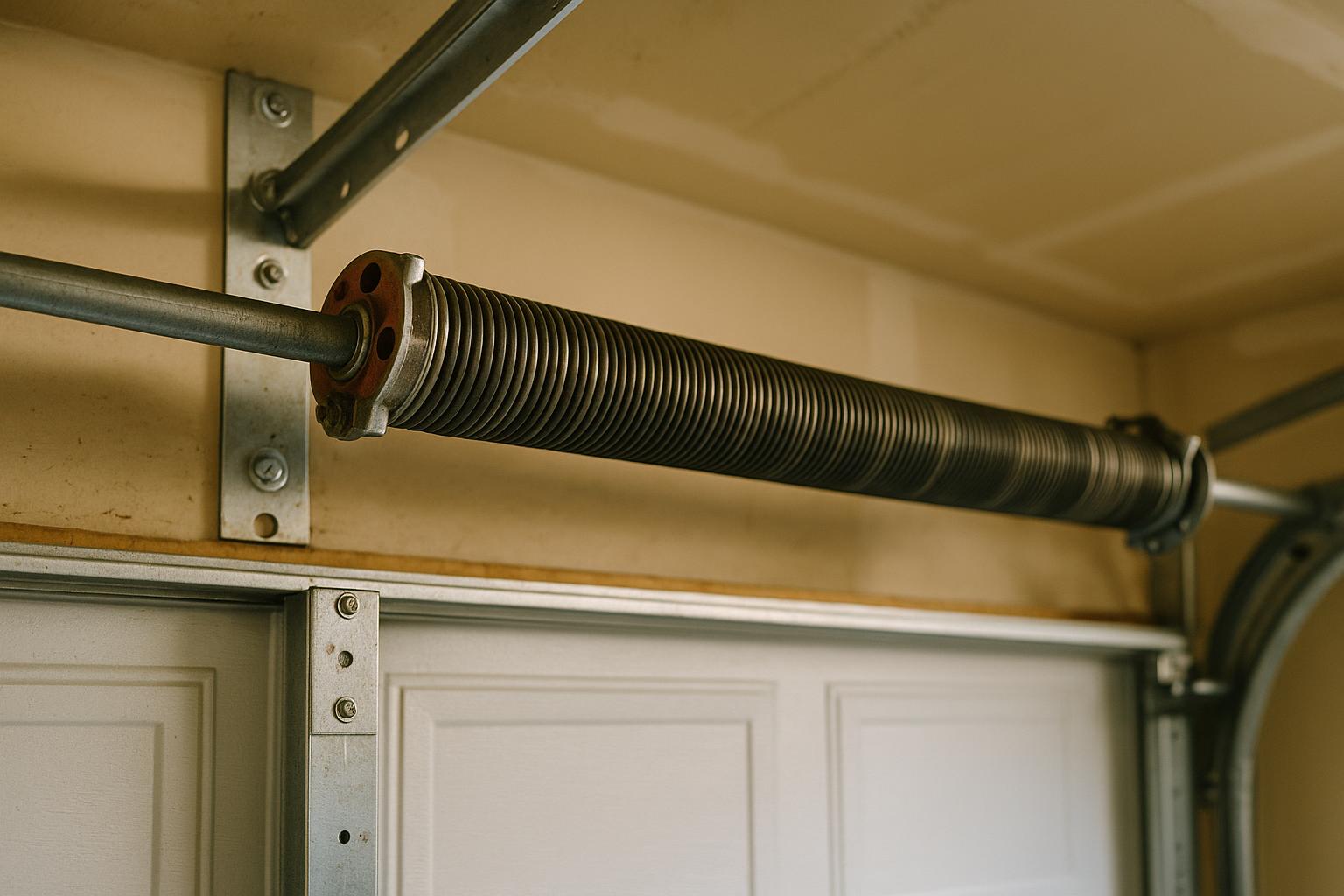
- Torsion springs are mounted on a metal shaft above the garage door opening. They twist and unwind to raise and lower the door. Torsion springs are the more common type found in modern garage door systems and tend to last longer.
- Extension springs run along the horizontal tracks on either side of the door. They stretch and contract as the door moves. Extension springs are typically found on older or lighter doors.
Both types wear out over time, and both can be dangerous when they break. Regardless of which system you have, the warning signs are similar.
7 Warning Signs Your Garage Door Springs Are Failing
1. The Door Feels Heavier Than Usual
Try this simple test: disconnect your garage door opener by pulling the emergency release cord, then manually lift the door about halfway. A properly balanced door should stay in place on its own. If the door feels extremely heavy, slides back down, or is difficult to lift at all, your springs have likely lost tension and are no longer doing their job.
2. The Door Opens Unevenly or Crooked
If one side of your garage door rises faster than the other, it usually means one spring has weakened more than its counterpart. This uneven movement puts extra stress on the tracks, rollers, and opener, which can lead to additional damage if not addressed promptly.
3. You Hear a Loud Bang From the Garage
A sudden, loud bang coming from your garage — almost like a firecracker — is often the sound of a torsion spring snapping. When a spring breaks, it unwinds rapidly and releases a tremendous amount of stored energy. If you hear this sound, do not attempt to operate the door. Call a professional immediately.
4. There's a Visible Gap in the Spring
Take a look at the torsion spring above your garage door. An intact spring is a tightly wound coil with no gaps. If you see a visible separation or gap in the coil, the spring has broken and needs to be replaced before you use the door again.
5. The Opener Struggles or Stops Mid-Cycle
Your garage door opener is designed to work in partnership with the springs. When the springs weaken, the opener has to compensate by working harder. You might notice the motor straining, the door moving more slowly than usual, or the opener stopping partway through a cycle. Continuing to run the opener under these conditions can burn out the motor.
6. The Door Slams Shut Quickly
Healthy springs control the speed at which your garage door closes. If the door drops faster than normal or slams shut, the springs are no longer providing adequate resistance. This is a serious safety hazard, especially in homes with children or pets.
7. Your Springs Are More Than 7-10 Years Old
Most standard garage door springs are rated for approximately 10,000 cycles. Depending on how frequently you use your door, that translates to roughly 7 to 10 years of service. If your springs are approaching or have exceeded that age, it's wise to have them inspected — even if you haven't noticed obvious problems yet. Proactive replacement is always safer and more convenient than an emergency repair.
Why Spring Replacement Is Not a DIY Job
We understand the appeal of tackling home repairs yourself, but garage door spring replacement is one job that should always be left to trained professionals. Here's why:
- Extreme tension: Garage door springs store an enormous amount of energy. A spring that releases unexpectedly can cause severe injuries or even death.
- Specialized tools required: Proper spring replacement requires winding bars, clamps, and other tools that most homeowners don't have.
- Precise calibration: Springs must be wound to exact specifications based on the door's weight and size. Incorrect tension leads to poor performance and accelerated wear on other components.
- Matching matters: Even if only one spring has broken, professionals typically recommend replacing both springs at the same time. The remaining spring has the same amount of wear and is likely close to failure itself.
Every year, emergency rooms across the country treat serious injuries from DIY garage door spring repairs. It's simply not worth the risk.
What to Expect During a Professional Spring Replacement
When you call a qualified garage door technician in Palm Beach Gardens for spring replacement, here's what the process typically looks like:
- The technician inspects the entire door system, including cables, rollers, tracks, and the opener.
- The old springs are safely unwound and removed.
- New springs are installed and wound to the manufacturer's specifications for your specific door.
- The door is tested for proper balance, smooth operation, and correct safety reversal function.
- The technician lubricates moving parts and checks for any additional issues.
The entire process usually takes about an hour, and you're left with a door that operates smoothly and safely.
Don't Wait for a Complete Failure
A broken garage door spring doesn't just mean inconvenience — it can leave your home unsecured, your car trapped inside, and your family at risk. If you've noticed any of the warning signs described above, the smartest move is to schedule an inspection before the problem gets worse.
At Palm Beach Gardens Garage Door Specialists, we handle spring replacements for homeowners throughout Palm Beach Gardens, Jupiter, North Palm Beach, and the surrounding communities. We carry a wide selection of springs to fit virtually any residential or commercial door, and we stand behind every repair with our commitment to quality workmanship.
If your garage door isn't performing the way it should, give us a call. We'll diagnose the issue, explain your options, and get your door back in safe working order — usually the same day.