
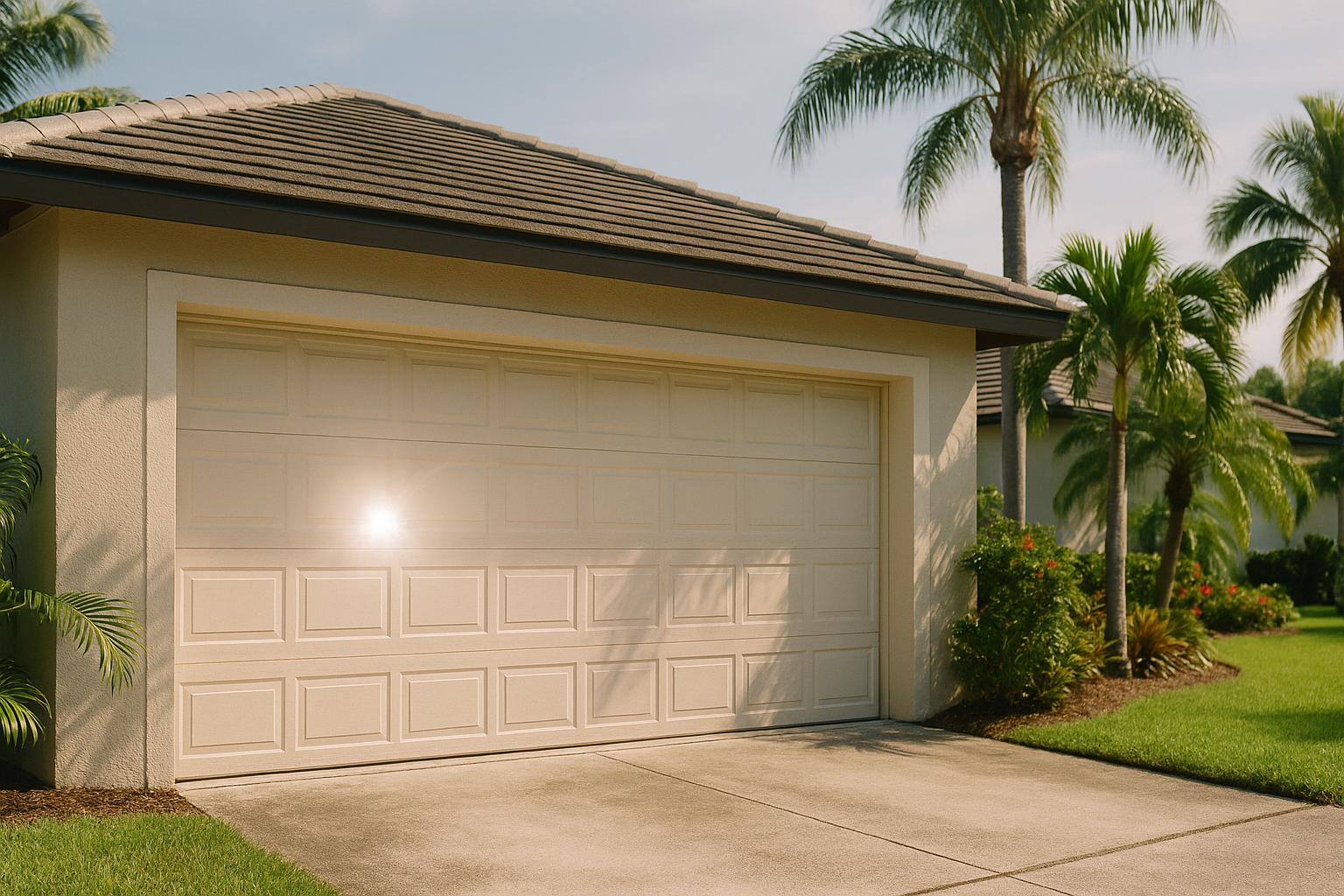
Your Garage Door vs. South Florida's Climate
Living in Palm Beach Gardens means enjoying year-round sunshine, warm temperatures, and easy access to beautiful beaches. But the same tropical climate that makes this area so desirable can quietly wreak havoc on your garage door system. From intense UV exposure and extreme heat to relentless humidity and salt-laden air, your garage door faces environmental challenges that homeowners in cooler, drier climates simply don't deal with.
Understanding how these conditions affect your garage door — and what you can do about it — can save you from unexpected breakdowns, costly repairs, and premature replacement. Here's what every Palm Beach Gardens homeowner should know.
Heat and UV Damage to Garage Door Panels
During the summer months, temperatures in South Florida regularly climb into the mid-90s, and the surface temperature of a garage door facing direct sunlight can exceed 150°F. Over time, this kind of heat exposure causes real damage:
- Warping and buckling: Wooden garage doors are especially vulnerable. Prolonged heat exposure can cause panels to warp, creating gaps that compromise insulation and security.
- Fading and peeling paint: UV rays break down paint and finish coatings on steel, aluminum, and wood doors alike. What starts as minor fading can progress to peeling and flaking, leaving the underlying material exposed to moisture.
- Seal degradation: The rubber weatherstripping along the bottom and sides of your garage door dries out and cracks faster in intense heat, reducing its ability to keep out rain, pests, and debris.
If your garage door faces west or south, it's absorbing even more direct sunlight throughout the day. Homeowners in neighborhoods across Palm Beach Gardens, Jupiter, and North Palm Beach should inspect their door's finish and seals at least twice a year.
Humidity and Moisture: The Silent Destroyers
South Florida's average humidity hovers around 75% year-round, and during the wet season it can climb even higher. That constant moisture in the air creates the perfect conditions for several problems:
Rust and Corrosion on Metal Components
Your garage door system relies on dozens of metal parts — springs, hinges, rollers, tracks, and cables. When these components are exposed to persistent humidity, they begin to rust and corrode. Corroded springs are weaker and more likely to snap without warning. Rusted tracks create friction that strains your opener motor. And corroded hinges can seize up, causing the door to bind or operate unevenly.
Mold and Mildew Growth
The warm, damp environment inside many garages is ideal for mold and mildew. If your garage door's weatherstripping has deteriorated or your door doesn't seal properly, moisture gets trapped inside. Mold can grow on wooden door panels, along the interior walls, and even on items stored in your garage. Beyond being unsightly, mold poses health risks for your family.
Swelling in Wooden Doors
If you have a wooden garage door, humidity causes the wood to absorb moisture and swell. This can make the door stick, operate sluggishly, or put extra strain on the opener. Over repeated cycles of swelling and drying, the wood can crack and split.
Salt Air Corrosion Near the Coast
Homeowners in Juno Beach, Tequesta, and the coastal areas of Palm Beach Gardens face an additional challenge: salt air. The salt carried in ocean breezes accelerates corrosion on metal components far faster than humidity alone. Even garage doors located several miles from the coast can be affected.
If you live near the water, pay special attention to:
- Torsion and extension springs
- Steel tracks and brackets
- Chain or screw drive mechanisms on your opener
- Any exposed steel on the door panels themselves
Choosing a garage door with a corrosion-resistant finish — or upgrading to aluminum or fiberglass panels — can make a significant difference in longevity for coastal properties.
How to Protect Your Garage Door from Florida's Climate
The good news is that with some proactive care, you can dramatically extend the life of your garage door system, even in our demanding climate. Here are practical steps every homeowner should take:
1. Schedule Regular Maintenance
Professional maintenance is the single most effective way to combat climate-related wear. During a maintenance visit, a technician will lubricate all moving parts with a product designed to repel moisture, inspect for early signs of rust or corrosion, test spring tension, check weatherstripping, and ensure the door is properly balanced. We recommend scheduling maintenance at least once a year — ideally before the wet season begins in late spring.
2. Keep the Door and Tracks Clean
Salt residue, dirt, and grime accelerate corrosion. Washing your garage door with mild soap and water every few months removes these contaminants before they cause damage. Don't forget to wipe down the tracks and hardware as well.
3. Repaint or Reseal When Needed
If you notice fading, peeling, or cracking in your door's finish, don't wait. A fresh coat of exterior-grade paint or sealant acts as a barrier against UV rays and moisture. For wooden doors, resealing every two to three years is a smart investment.
4. Replace Weatherstripping Promptly
Cracked or flattened weatherstripping can't do its job. Replacing the bottom seal and side seals is an affordable fix that keeps moisture, insects, and heat out of your garage. In our climate, weatherstripping may need replacement every three to five years.
5. Upgrade to Climate-Resistant Materials
If your garage door is nearing the end of its life, consider replacing it with a model designed for coastal and tropical environments. Aluminum doors with powder-coated finishes, fiberglass doors, and steel doors with factory-applied corrosion-resistant coatings all perform well in Palm Beach Gardens' climate. An insulated door also helps regulate the temperature inside your garage, reducing heat buildup and condensation.
6. Lubricate Moving Parts Between Service Visits
Applying a silicone-based lubricant to springs, rollers, and hinges every few months helps prevent rust and keeps everything operating smoothly. Avoid using WD-40 as a long-term lubricant — it's a solvent that can actually strip away protective coatings over time.
When to Call a Professional
Some climate-related damage is easy to spot — peeling paint, visible rust, a door that sticks or makes grinding noises. Other problems are harder to detect until they become serious. A spring weakened by corrosion can snap suddenly. A motor straining against a swollen or misaligned door can burn out without much warning.
If you notice any of the following, it's time to call for a professional inspection:
- Unusual noises during operation — grinding, squealing, or popping
- The door moves unevenly or jerks during opening or closing
- Visible rust on springs, cables, or tracks
- The door doesn't seal flush against the floor
- Your opener seems to be working harder than usual
Keep Your Garage Door Ready for Whatever Florida Throws at It
Your garage door is one of the largest moving parts of your home and one of the most exposed to the elements. In a climate like ours in Palm Beach Gardens, a little preventive care goes a long way toward avoiding emergency repairs and getting the full lifespan out of your door and opener system.
At Palm Beach Gardens Garage Door Specialists, we understand the unique challenges that South Florida's weather presents. Whether you need a maintenance tune-up, rust-damaged hardware replaced, new weatherstripping, or a full door replacement built to handle our climate, we're here to help. We serve homeowners throughout Palm Beach Gardens, Jupiter, North Palm Beach, Juno Beach, Tequesta, and West Palm Beach — and we stand behind every job we do.